

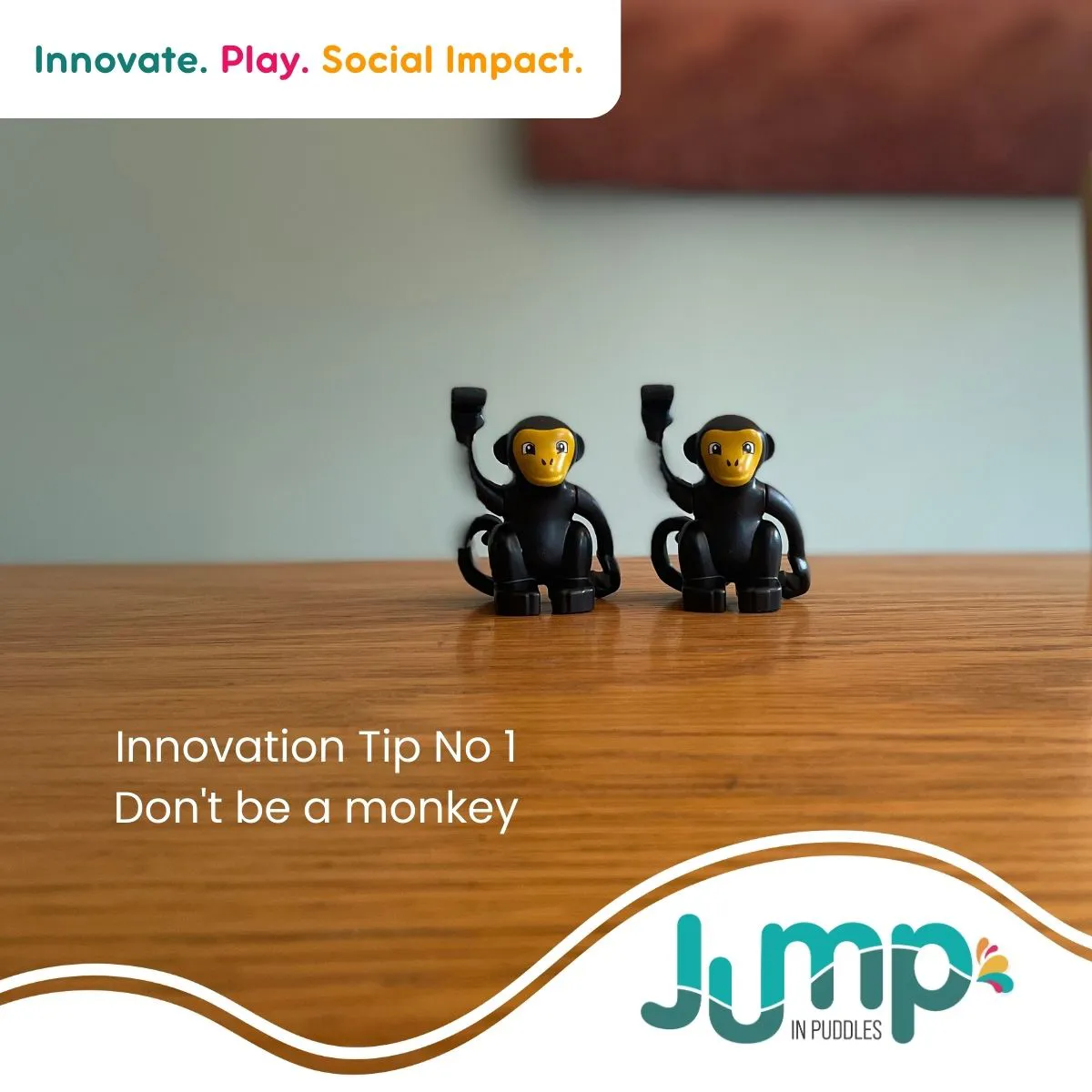
Imagine a cage with 5 monkeys (don’t worry it’s just a story). Inside the cage is a banana on a ledge and a monkey goes up the ladder towards the banana. As soon as reaches the top, all the monkeys are soaked with ice-cold water. Another monkey has a go – again all the monkeys are sprayed with cold water. It isn’t long before the monkeys are preventing any new attempts.
Now the cold water is turned off and one monkey is removed and replaced with a new one. Not surprisingly the new monkey spots the banana and starts to climb. To her surprise, all the monkeys attack her and she soon knows not to touch the ladder.
The original monkeys are replaced one by one. Each time the new one, learns quickly not to go to the banana. Now all the original monkeys that were sprayed with ice cold water have been replaced but no-one approached the ladder. Why not? Because it’s the way it’s always been around here.
Challenging Toxic Assumptions
Many organisations and teams hold toxic assumptions. Beliefs that everyone shares that either once were true but is no longer true or assumptions that are based on unconscious ideas and convictions and how things do or don’t work. It is always easier to stay in our comfort zone or join the crowd when you join the organisation.
If I think about my career until 2020, I always held the assumption that creative workshops were best in person. Then Covid started and we flipped immediately to remote workshops and I experienced brilliant experiences – by involving diverse people who would have never come together in person and I saw how much it helped more introverted reflective participants. Plus I didn’t have to deal with those pesky Post Its that floated off walls.
As an innovator, you can also use assumptions as a powerful tool for new ideas as it opens up creative directions in problem solving. A great tool is Reversing Assumptions:
- Try listing all the assumptions that your organisation currently holds.
- Now reverse the assumptions by writing down the very opposite.
- Finally come up with new solutions to the new assumption.
For example, let’s assume you are a charity:
- An assumption is that you need to be the expert.
- The opposite is that you are a charity with no expertise in your charitable purpose.
- So how could a charity operate without being the experts? You could bring together a community of volunteers with lived experience and ideas could be crowdsourced.
In Summary:
- Don’t be a monkey.
- Challenge existing assumptions when you join a new team.
- Regularly challenge yourselves as whether your fundamental social problem and solution remains true and relevant in a changing world.
- Try reversing assumptions as a powerful creative tool.
0 Comments